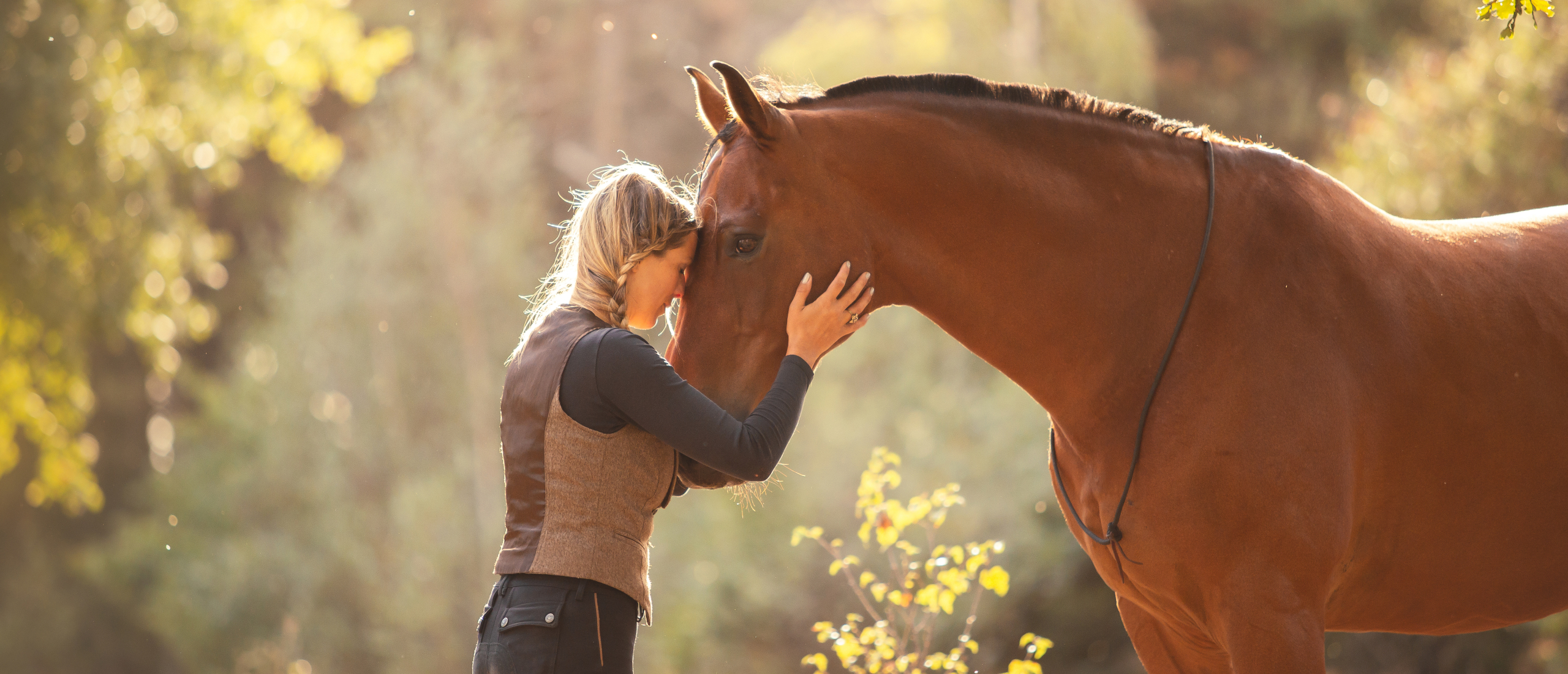
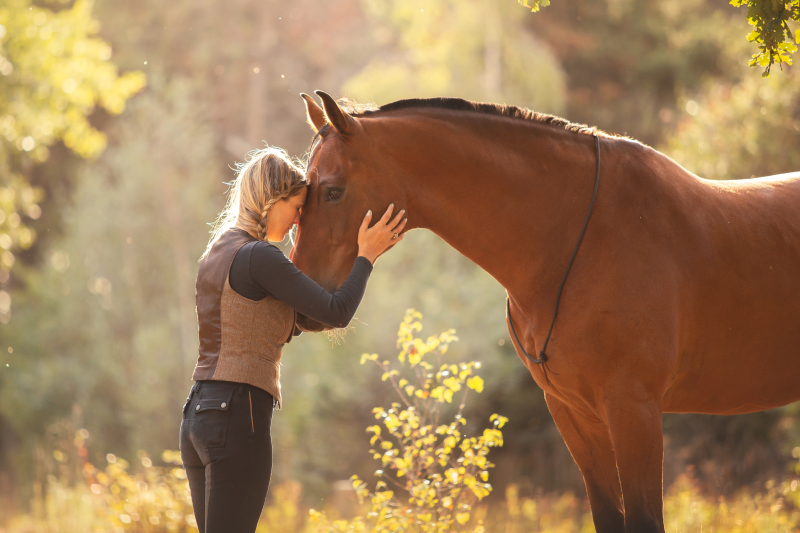
If you go back to the very beginning with Bongo: who were you both back then, and how has your relationship changed over the years?
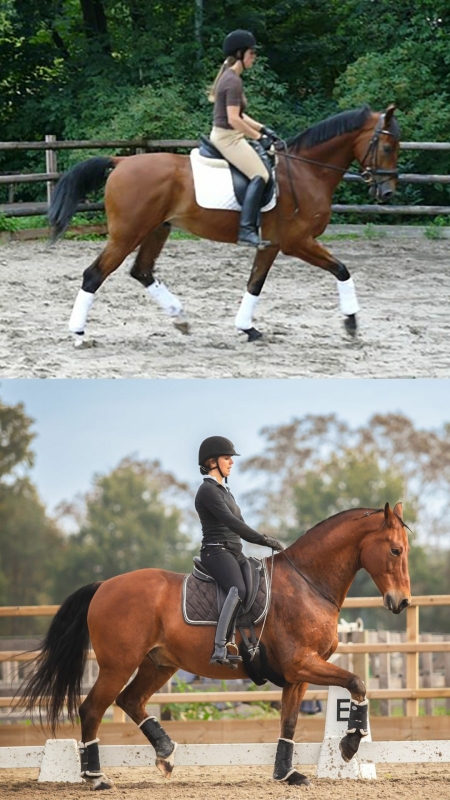
When I first saw Bongo advertised on Marktplaats as a four-year-old, there was actually only a foal photo of him. Still, my immediate thought was: I like him! And, to be completely honest, I could afford him at the time too, because Bongo cost €1,000.
When I went to see him at the farm where he was born, he was very much a loner. And yet, somehow, I felt a kind of connection between us. He barely had any tail left, he was always kept alone in the field because he would chase other horses through the fencing, and in his stable he was still tied up in a very old-fashioned way with a chain around his neck.
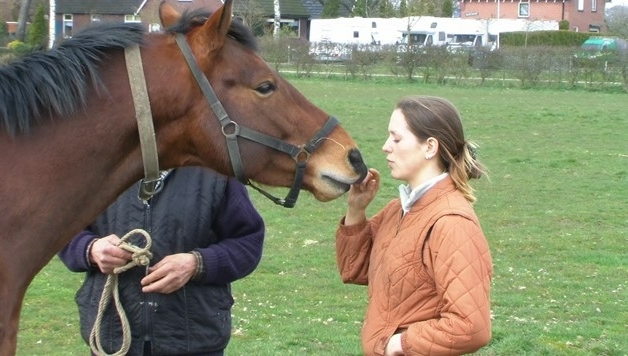
I had him clinically examined, and during the vetting we simply could not get him to canter. So, as a joke, the vet wrote on the report: “Can trot very well.” I still have that report to this day.
Because stallions weren’t allowed at the yard where I kept my horses, he was gelded straight away. Not long afterwards, he developed strangles. Without my knowledge, a sick horse had been brought onto the yard, and because Bongo had just been gelded, his immune system wasn’t at its strongest. For a while, it really was touch and go. He spent a long time at the veterinary clinic and then had to remain in quarantine. It was during that period that a very deep bond began to grow between us.
At the time, I didn’t have my own place and financially I could really only afford to keep one horse for myself. So I would usually start a horse, train it and then sell it again. But I think you can probably guess what happened with Bongo… he stayed.
It also turned out that he had sweet itch, which hadn’t been disclosed when I bought him, and he certainly wasn’t an easy horse. But I have never regretted keeping him for a single moment.
Despite, or perhaps partly because of, all his challenges, Bongo is one of the horses who has truly changed my life. So many years have passed since then, and he has grown from my partner in crime into a horse who holds an incredibly important place within our entire herd — and within my life.
What role does Bongo have within the herd?
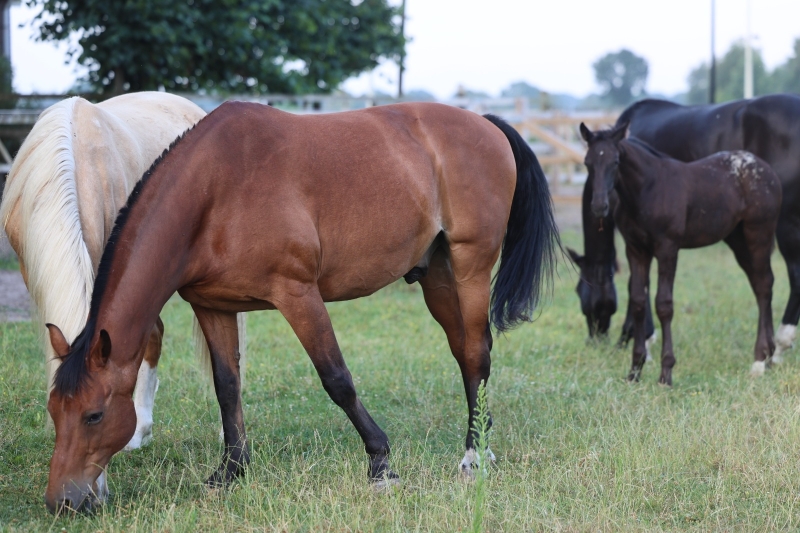
Bongo truly is a pillar within our herd. Over the years, he has become something of a surrogate father to our foals and young horses, and it is a role that suits him incredibly well.
What makes it even more special is that he wasn’t social at all when he was younger. He used to be kept alone because he would chase other horses through the fencing, and now he is the one our young horses can learn so much from. I find that transformation incredibly special to witness.
He has a certain calmness and clarity about him. He doesn’t have to do much; his presence alone means something within the herd.
And at the same time, somewhat surprisingly, he absolutely loves change. New experiences, adventures, travelling… those things can really bring him to life. It might not fit the image people often have of a senior horse, but that curiosity is still very much a part of who Bongo is.
What has Bongo taught you about training a senior horse?
Because I’ve had the privilege of guiding Bongo from the very beginning of his training all the way into his senior years, we’ve experienced almost every stage together. And even now, I still learn from him every day.
Bongo has a genetic condition affecting his front legs, involving ossification and arthritis. A few years ago, movement became noticeably more difficult for him. From that point on, we started tailoring everything even more closely to him: treatments, nutrition, veterinary check-ups, Guasha, training, and above all, carefully observing what he needs at any given moment.
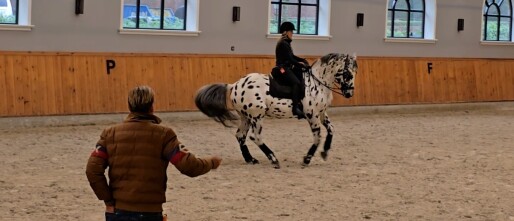
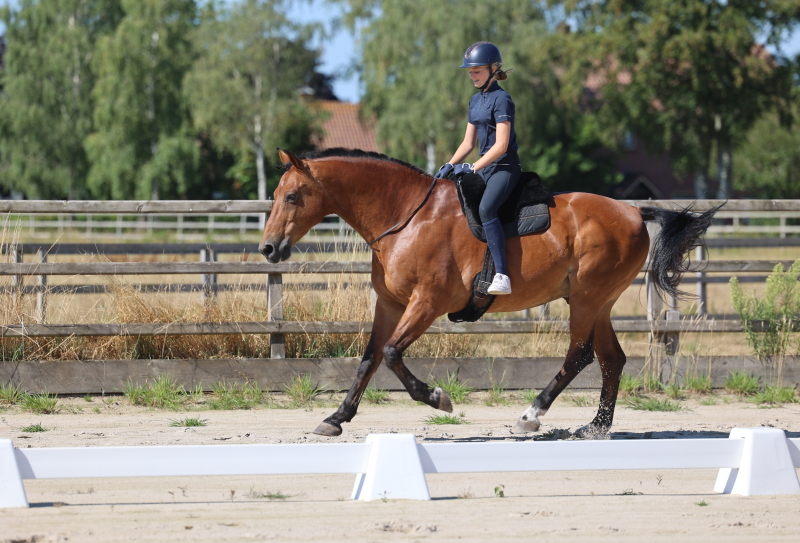
At the moment, thankfully, he is very comfortable. Each week, depending on how he feels, we do some fitness work, and every now and then we go for a short ride in the forest together. He absolutely loves that.
One of the biggest things Bongo has taught me is that growing older doesn’t automatically mean we should do less and less with a horse. Movement can actually be an important part of ageing well, as long as we keep listening and adapting. How does he feel today? How is he moving? How is he eating? What does he feel like doing? What can his body comfortably manage?
And then there is something that may be harder to measure, but that I believe is just as important: continuing to feel seen and appreciated.
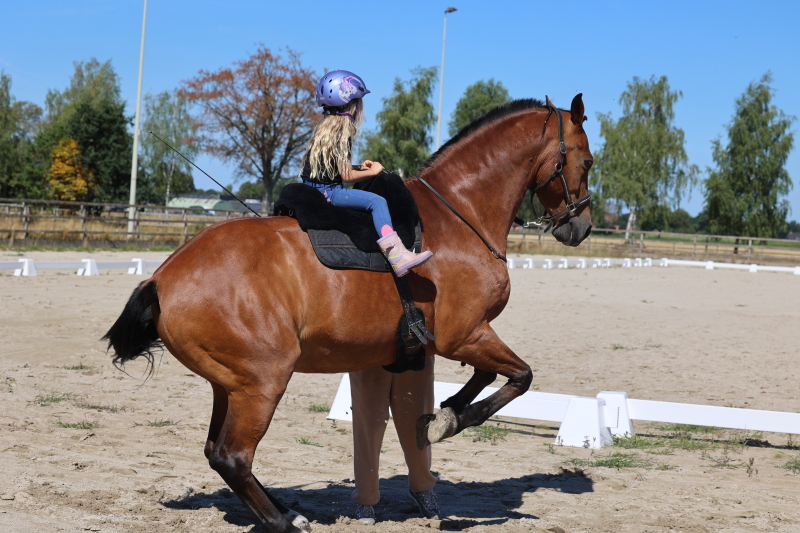
When the girls completely pamper Bongo and Jolie, for example, puts a beautiful matching set on him, you can literally see him grow. He lights up and suddenly seems ten years younger. I love seeing that.
A senior isn’t simply an old horse we take care of. He still wants to participate, to matter, and to feel that he is part of everything.
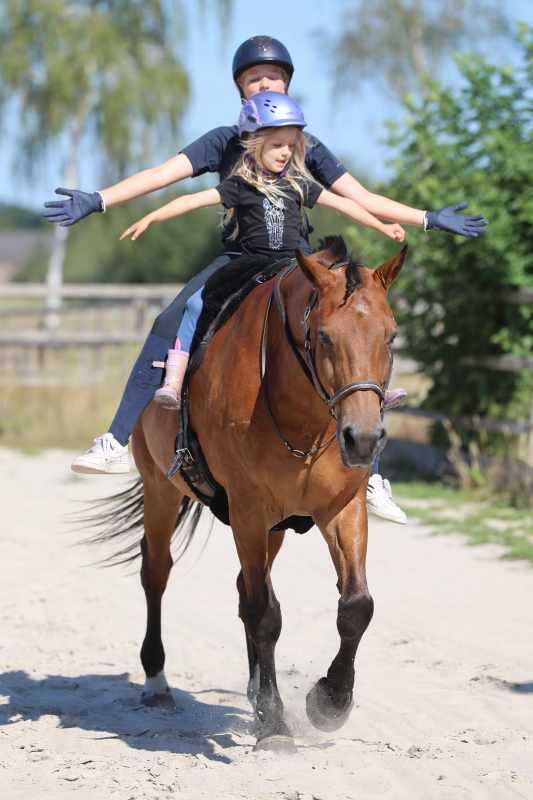
Which lessons from Bongo do you pass on to your students?
One of the most important things Bongo has taught me, and something I really want to pass on to our students, is that not every horse shows enjoyment in the same way.
Bongo, for example, isn’t a horse who naturally has a huge desire to please. When we train together, he needs me to bring energy too. I have to motivate him and get him enthusiastic. And that is completely okay.
A horse like Vanilla is almost the complete opposite. With him, I have to slow things down a little; he would happily follow me around all day and sometimes quite literally pushes himself into my space, haha.
A horse like Bongo can therefore bring up quite a few emotions in an owner. We all want to feel that our horse genuinely loves working with us. And when a horse doesn’t constantly offer things or enthusiastically follow us everywhere, it is easy to take that personally: Does he not enjoy it? Do we really have a connection? Am I doing something wrong?
But Bongo has taught me that there can be an enormous amount of connection with a horse who doesn’t constantly give you reassurance.
Perhaps that is actually one of his most beautiful lessons: learning to see the horse standing in front of you, rather than the image you have in your mind of how a “connected” horse is supposed to behave.
One horse may need more energy from you, while another needs more calmness. And when you learn to recognise and respect those differences, you create the space to truly understand one another.
That is something Bongo has been teaching me for a very long time — and probably still teaches me a little more every single day.
Watch more videos: