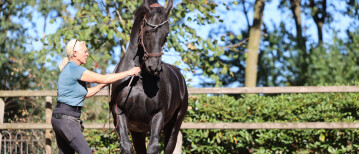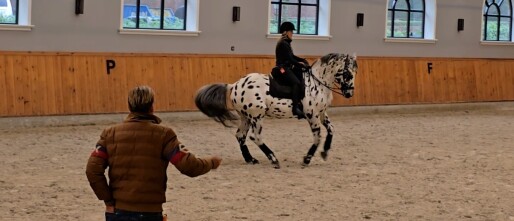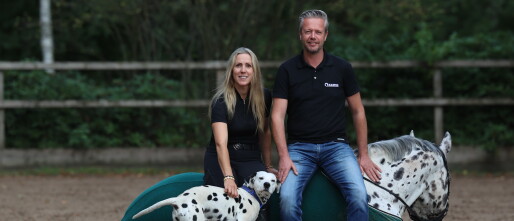
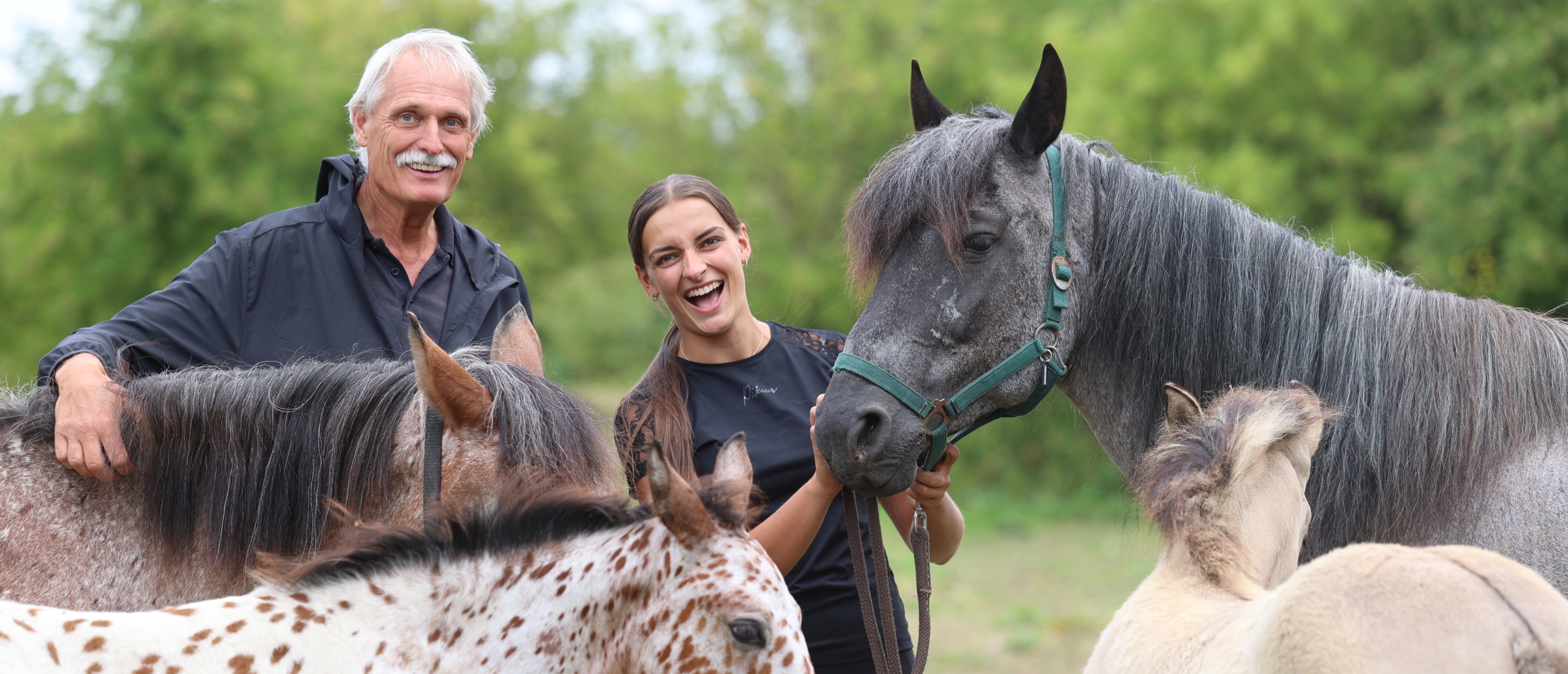
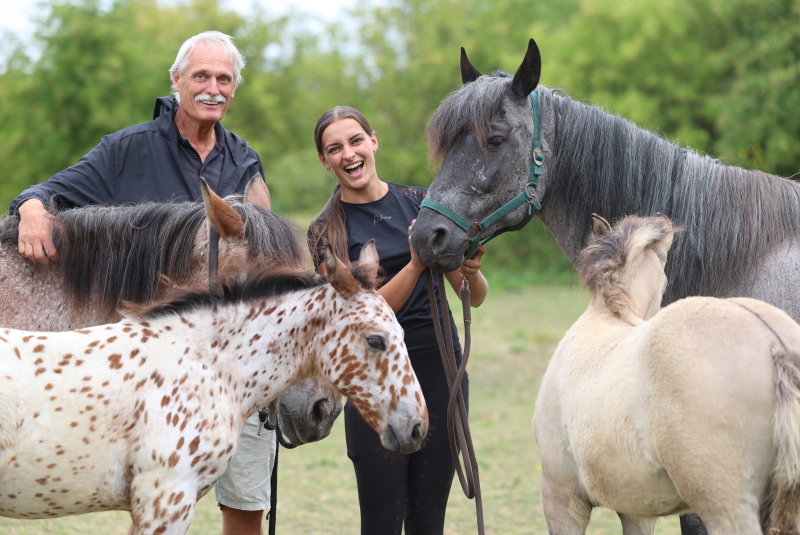
We asked Femy and Pieter Bremer (pictured above: Lisenna and Pieter) a number of questions about their unique approach to keeping and breeding horses. We talked about their horses living in natural environments, what growing up in this way means for their development, and the choices they make within their breeding programme. We also discussed their decision to choose Nevada as a breeding stallion and what they are now seeing in his offspring. These questions and conversations came together in the following story.
The questions we asked:
Could you take us into the world of your horses? What does their living environment look like, which horses and age groups live together, and how do they spend their days there? What makes this place so special for the horses? And what do you notice about their development and behaviour?
What do you enjoy most about breeding horses that grow up in such a natural environment?
What makes Nevada such a suitable breeding stallion for you, and why did you choose to breed with him?
Which of Nevada’s qualities do you recognise in his offspring, and what do you look for when selecting a mare to breed with him?
From a shared dream to a very special place
We are Femy and Pieter Bremer. We met while studying to become teachers and discovered that we shared a dream. We wanted to create a connection between people and animals.
We wanted to build a sustainable business on organic land near Lelystad. That is where we began pioneering, and slowly our dream started to take shape. At first, our focus was solely on education, and later care became part of our work as well. Our income initially came from working in education and, later, from horse drawn carriage rides through the woodland area next to our farm, the Oostvaardersplassen and the Natuurpark.
At first, the carriages were pulled by Fjord horses, and later Black Forest Horses joined them.
For riding, alongside our Fjord horses, we were looking for breeds capable of comfortably carrying more weight. For this, we introduced Black Forest Horses and Norikers. We have regularly bred foals from both our Fjords and Black Forest Horses, often using our own stallion. At present, we use our grey coloured stallion Skorlan for breeding.
Unfortunately, this was not possible with the Norikers, as the Austrian studbook did not want to sell approved breeding stallions. We particularly loved the Norikers for their impressive strength combined with their wonderfully calm and down to earth character.
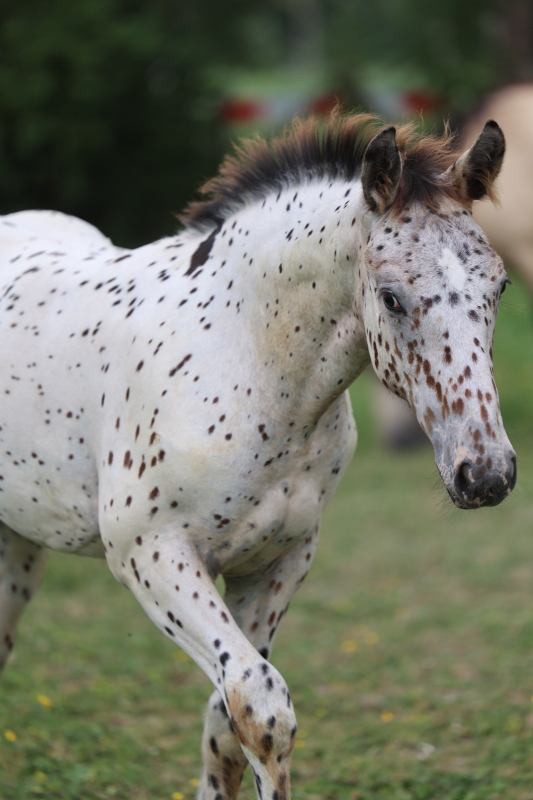
Allowing horses to grow up in nature
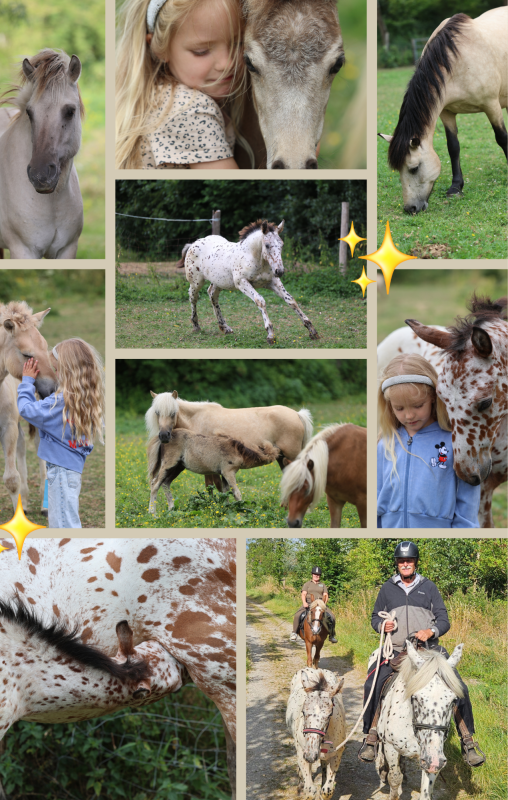
Eventually, we were able to lease 12 hectares of a former sand depot close to our farm. The area had become completely overgrown and has a wonderfully varied landscape with many differences in elevation. There are two fox dens, roe deer roam through the area, and even woodcocks breed there.
We had a deep pond excavated to ensure that there is always sufficient drinking water for the horses. Once the mares and foals had been socialised, they were introduced to this area, together with horses that simply needed a little “holiday”.
The land offers a wide variety of vegetation, including herbs, reeds, thistles, willow and grass. This year, the area is home to Fjord horses with their foals, a Noriker mare with her foal by Nevada, and a Karakachan, a Bulgarian horse breed, with her foal.
Later, we were able to lease another four hectares alongside this area. A trial is currently taking place there involving several natural and hardy horse breeds, including a Bosnian Mountain Horse stallion together with mares such as Koniks, a grey Fjord and an Icelandic cross.
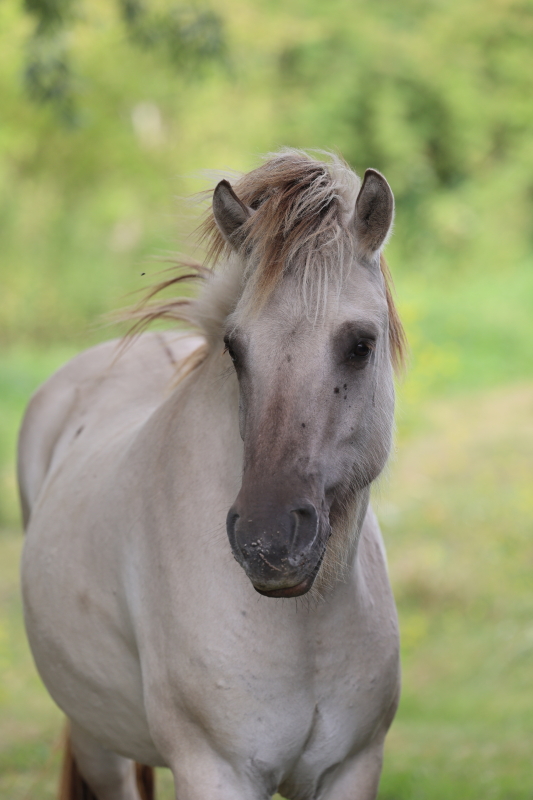
Observing, experiencing and connecting
We regularly visit this area together with participants from our care farm. It is wonderful simply to be there, observing the horses, spending time with the foals and discovering what the horses choose to eat at different moments.
In the Zuigerplaspark, an adventure forest has been created where children can climb and explore a variety of natural obstacles over and around the water. Camping is also possible there, and a mountain bike trail runs through the area.
And there, in the horse valley, a group of Fjord horses from our farm has been living for many years, outdoors all year round whenever conditions allow. Among them is our oldest and very special Fjord, Merel, who is now an incredible 34 years old!
Visiting this area with our participants is always a wonderful experience. Together, we search for the horses, check their health and, something no one else is allowed to do, give them a little grooming, brushing and affection.
Managing this area requires close cooperation with the foundation responsible for the land. This collaboration takes place in complete harmony.
Breeding with Nevada: what do we see in his offspring?
And now, Nevada.
As you can see in the photo, our Noriker mare Cordula complements Nevada beautifully in terms of appearance and, from what we know, certainly in character as well.
For Cordula, it was important to choose a stallion who could add more suppleness, particularly in the hindquarters. They both have a strong constitution, while Nevada also brings other qualities that are extremely valuable to us, including his social nature, something that is especially important within the environment of our care farm.
This combination resulted in a truly beautiful filly who is exceptionally people oriented.
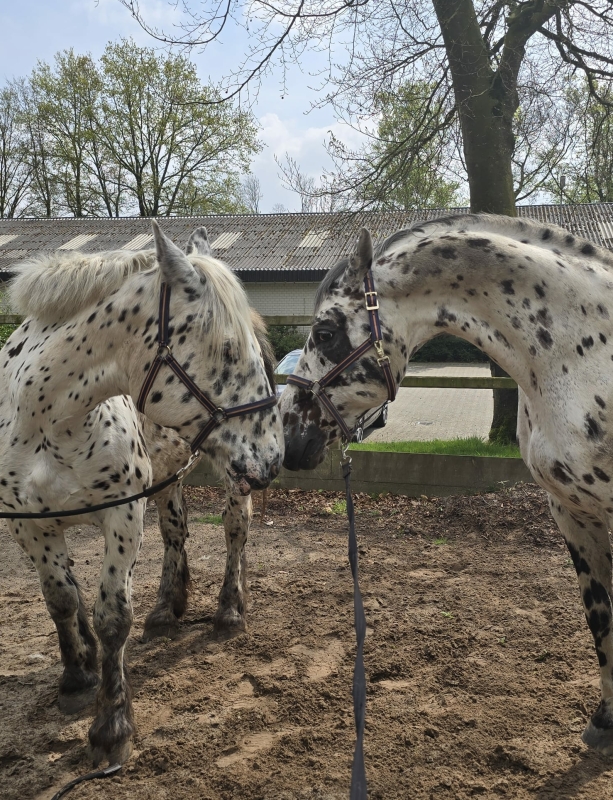
Indy has also given us a beautiful filly by Nevada, and this foal is equally people oriented.
Both mares are once again in foal to Nevada for next year. We are also expecting a foal from our Lithuanian mare, a buckskin, who has also been covered by Nevada. And next year, Greetje is hoping for some colts!
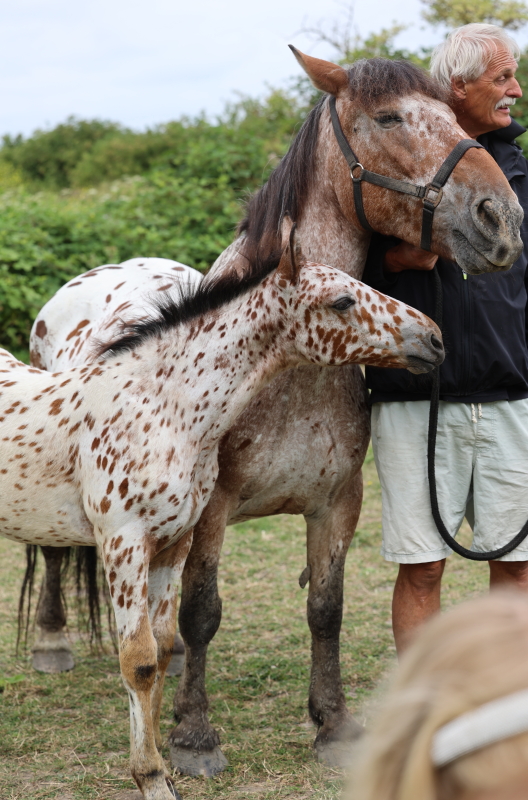
Desert Rose, a Nevada foal bred by Greetje, will join our weaned foals in October. Together, the youngsters will continue to grow and develop in the natural environment and group housing.
We are very much looking forward to following their development and seeing how they grow.